

Project Background
The power plant is located in a coastal area with limited freshwater resources, requiring desalinated seawater for boiler feedwater. The project demands stable production of product water meeting boiler feedwater standards under high-salinity conditions, with deep control of residual ions at the terminal stage.
Process Route and Product Selection
Process flow: seawater intake → pretreatment and filtration → seawater RO → secondary RO → mixed-bed polishing. The desalination stage uses DuPont SW30HRLE-400 high-rejection membrane elements, designed for high feed salinity and elevated operating pressure. The final polishing stage employs Rohm & Haas Amberlite UP6150 nuclear-grade mixed-bed resin.
Runtime effect
After system commissioning, the product water quality remains stable and meets boiler feedwater requirements, with specific power consumption per ton of water below design expectations. Polishing resin maintains consistent resistivity throughout its operating cycle; replacement is scheduled according to the cycle plan, ensuring manageable operational costs.
Runtime effect
- Produced water salinity meets boiler feedwater requirements.
- Tons of water power consumption is lower than the design value
- Stable operating cycle for polished resin
Products selected for this project
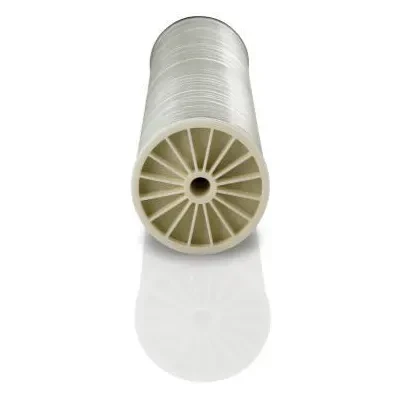
SW30HRLE-400
High-rejection seawater reverse osmosis membrane element designed for high-salinity feedwater and coastal intake applications.
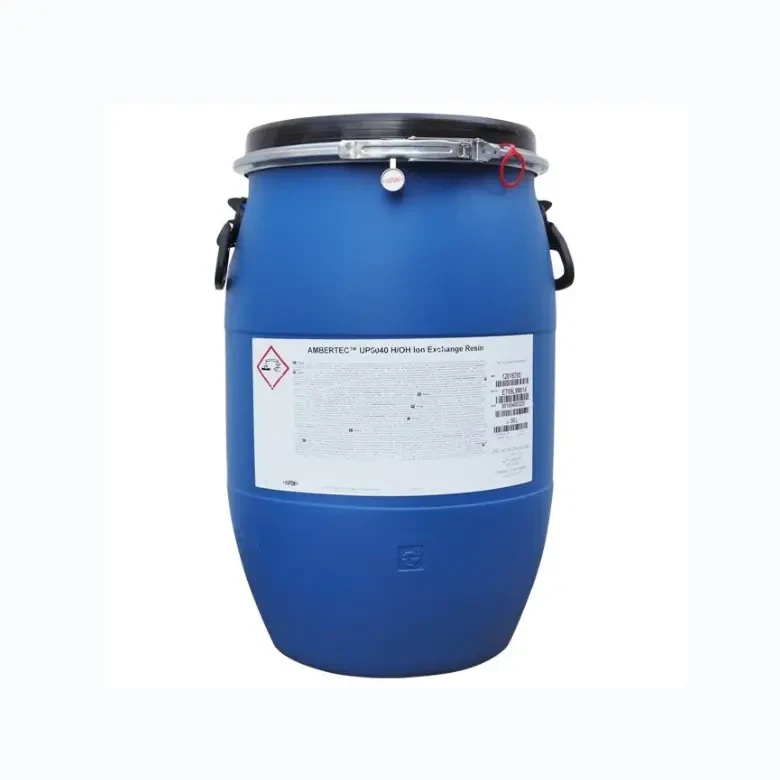
Amberlite UP6150
Nuclear-grade mixed-bed polishing resin for final purification in ultrapure water systems, controlling residual ions and resistivity of product water.


