

Project Background
The plant originally used conventional sand filtration as pretreatment for its advanced treatment unit. Seasonal fluctuations in algae and turbidity caused unstable effluent quality, leading to frequent pressure rise and flux decline in the downstream reverse osmosis system and high operational maintenance burdens. The upgrade must improve pretreatment effluent stability without expanding the footprint.
Raw Water Quality and Treatment Objectives
Raw water is sourced from a surface reservoir, with significant seasonal fluctuations in turbidity and elevated organic matter during algal blooms. The retrofit objective is to stabilize the pretreatment effluent turbidity below 0.1 NTU and maintain SDI15 within 3, ensuring consistent feedwater conditions for downstream reverse osmosis treatment.
Process Route and Product Selection
The modified process flow is: raw water → pre-oxidation and coagulation → ultrafiltration → security filtration → reverse osmosis → post-treatment and disinfection. The ultrafiltration stage uses DuPont SFD-2880 external-pressure PVDF hollow fiber membrane modules with air-water backwashing and periodic chemical-enhanced backwashing. The reverse osmosis stage uses DuPont BW30 PRO-400/34i brackish water membrane elements.
The ultrafiltration module's large membrane area reduces the number of system components, enabling installation within existing facility space. Its outside-in configuration handles high-turbidity feedwater effectively, eliminating breakthrough issues common with sand filtration during peak algal periods.
Runtime effect
After system commissioning, ultrafiltrate turbidity remained stable below 0.1 NTU, and SDI15 met reverse osmosis feedwater requirements. The pressure differential rise rate in the RO section slowed significantly compared to pre-retrofit operations, chemical cleaning intervals were extended, and water production costs decreased.
This project validates the technical feasibility of replacing sand filtration with ultrafiltration as pretreatment for reverse osmosis, offering a replicable retrofit strategy for surface water plants facing significant seasonal water quality fluctuations.
Runtime effect
- Ultrafiltrate turbidity is stably maintained below 0.1 NTU.
- The rate of increase in the differential pressure across the RO stages has significantly slowed.
- Frequency of chemical cleaning decreased compared to before the retrofit.
Products selected for this project
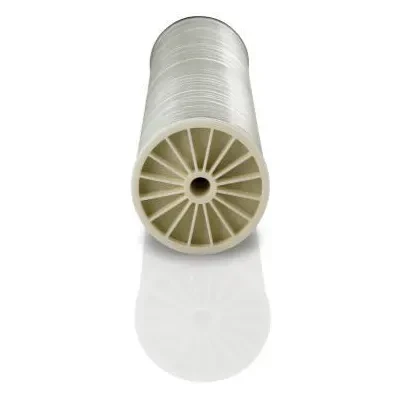
BW30 PRO-400/34i
8-inch brackish water RO membrane element, balancing salt rejection and production rate for industrial ultrapure water and municipal advanced treatment.
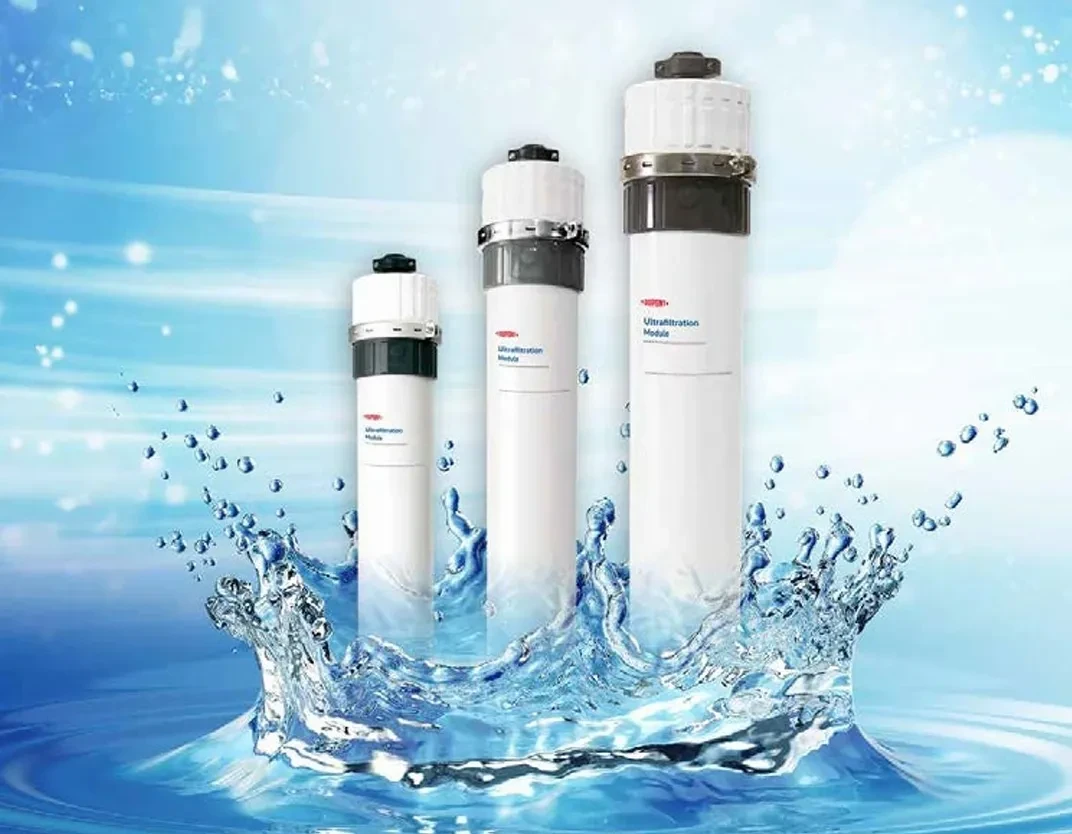
SFD-2880
Hydrophilic-modified PVDF ultrafiltration module designed to reduce membrane fouling in water sources with high organic content.


